Florida Net Metering Explained: How Homeowners Get Credit for Solar Power
By Nespola Solar Solutions Team
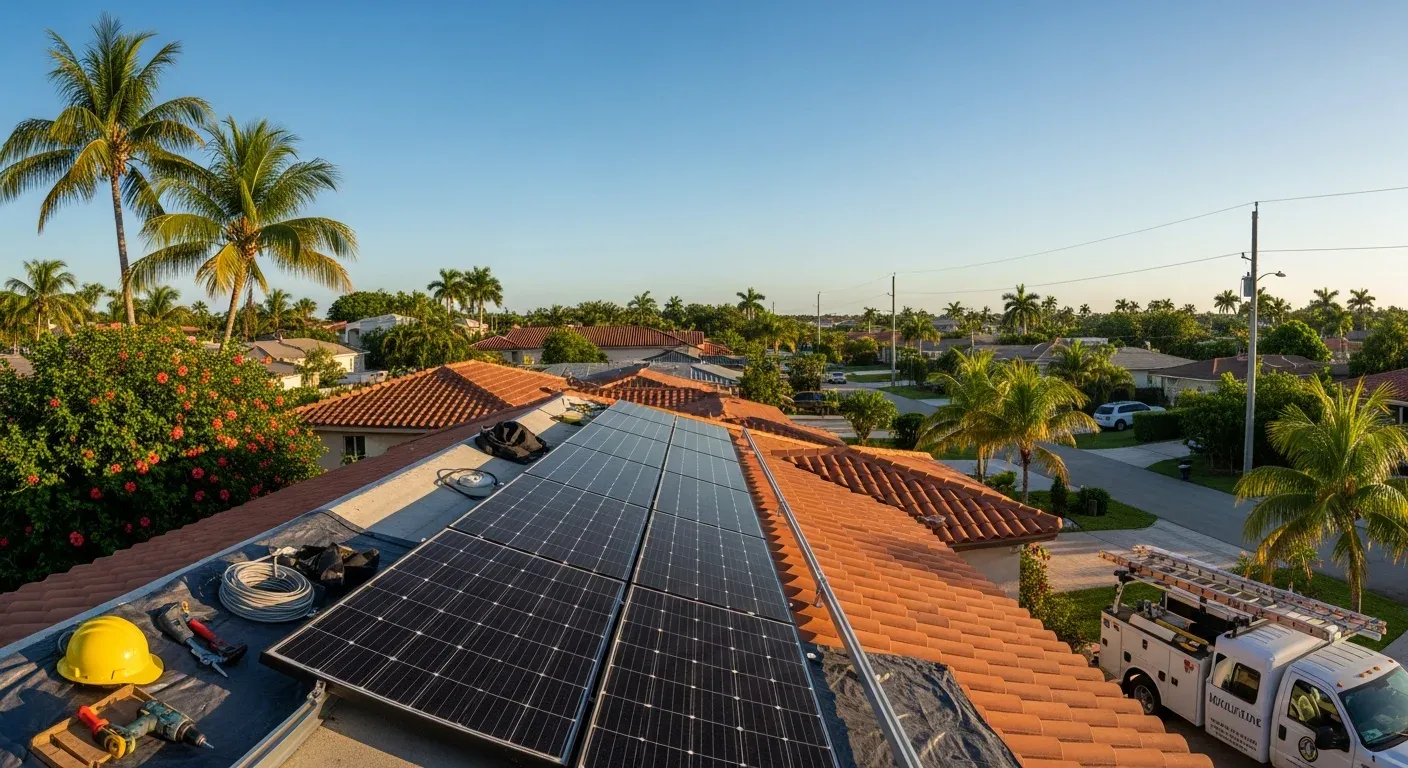
Florida’s sun and air-conditioning load make rooftop solar a natural fit. The billing rule that decides whether that production is worth what the salesperson claimed is net metering: you export surplus midday power and import in the evening, and the utility credits the difference.
Nespola Solar Solutions shops Tier 1 installers for Florida homeowners. We size systems to the tariff you will actually be on after permission to operate — not to a statewide slogan.
The 1:1 credit framework
Under Florida’s net metering framework for eligible customer-generators, exported kilowatt-hours have historically been credited at a one-for-one retail energy rate on participating investor-owned utilities. In plain English: a kWh you send to the grid knocks a kWh off what you later buy, for the energy portion of the bill. You still pay customer charges and other non-bypassable fees. You are not getting a monthly check for unlimited surplus.
Policy fights over weaker export rates have been live for years. That is why the contract should name the rider or tariff you will be billed on, not just “Florida net metering.”
FPL, Duke Energy Florida, and TECO
The three large investor-owned utilities most homeowners ask about are Florida Power & Light, Duke Energy Florida, and Tampa Electric (TECO). Each participates in statewide net metering rules, but interconnection portals, meter upgrades, and inspection cadence differ.
- FPL: Dense territory, high volume of rooftop applications, and a process that rewards complete paperwork the first time.
- Duke Energy Florida: Different application path and sometimes different upgrade costs on rural feeders.
- TECO: Own tariff language and true-up practices. Do not reuse an FPL savings slide on a TECO house.
Municipal utilities and co-ops set their own export rules. A design that works in FPL territory can be a poor fit on a muni with a weaker buyback.
How credits roll and what happens at true-up
After PTO, a bidirectional meter records energy delivered to you and energy received from you. Monthly statements net those flows. Unused credits typically roll forward through the year. At the annual true-up, leftover surplus is often cashed out or credited at a lower avoided-cost rate rather than full retail. That is why oversizing “just in case” can leave you giving away cheap spring power.
Time-of-use rates, if you are placed on them, change the story: a noon export may not be worth an evening import. Read the sample bill in the interconnection packet.
Sizing to maximize credits
We start with 12 months of kWh, not roof square footage. Target a high offset of annual usage without chronic overproduction that pays little at true-up. Shift flexible loads — EV charging, pool pumps — into solar hours when the tariff rewards it. If export credits weaken, a right-sized array plus a battery can beat an oversized roof that dumps midday power.
Storm engineering still matters. Florida arrays should meet Florida Building Code wind loads. A cheap quote that underspecifies racking is not a discount.
For Florida-specific next steps, see our Florida service area page or solar panel installation. Call (215) 431-3330 with a recent bill and your utility name.
Ready to go solar? Call (215) 431-3330 or Get a Free Estimate →