Solar Panels in Georgia: 2025 Guide to Incentives & Savings
By Nespola Solar Solutions Team
Georgia has strong sun, a growing rooftop market, and a utility landscape that rewards homeowners who read the tariff. It does not have a New Jersey-style SREC program or a state income tax credit that transforms every quote. The 2025 stack is still worth taking seriously: a 30% federal Investment Tax Credit, a property tax exemption for solar equipment, and Georgia Power programs — including net metering pathways tied to the Renewable Energy Development Initiative (REDI) and related riders — that determine how much your extra production is worth. Nespola Solar Solutions helps Georgia homeowners compare Tier 1 installers instead of taking a single Atlanta-metro pitch as gospel.
Federal ITC at 30%
The federal residential credit remains 30% of qualified costs for systems placed in service in 2025. Ownership (cash or loan) is how most homeowners capture it. PPAs and leases typically assign the credit to the fund. On a $24,000–$34,000 system, the credit is large enough that financing structure and dealer fees can matter as much as module wattage.
Georgia Power net metering and REDI
Georgia Power is the dominant IOU. Residential solar interconnection and net metering are not an unlimited open tap. Capacity, rider availability, and application windows associated with renewable development programs (including REDI-related initiatives) can constrain who gets a useful export credit and when. If your salesperson cannot name the rider you will be billed on after permission to operate, the savings slide is fiction.
Electric membership corporations (EMCs) and municipal utilities set their own interconnection and buyback rules. A design that works in Georgia Power territory may be a poor fit on a co-op feeder with a weak export rate or a long upgrade queue.
- Get the interconnection queue position and estimated PTO in writing.
- Ask whether export is full retail, avoided cost, or a hybrid.
- Confirm any system-size cap relative to your historical kWh.
Property tax exemption
Georgia law provides a property tax exemption for certain renewable energy equipment so the solar improvement is not simply added to your assessed value. File it. An unfiled exemption in a county with rising assessments is a slow leak in the model. We treat the exemption paperwork as part of a complete close-out, alongside final inspection and monitoring setup.
Average system cost in Georgia
Installed prices in 2025 for quality residential systems often land in the mid-$20,000s to low-$30,000s before the ITC, with Atlanta-area complexity (HOAs, older roofs, shaded lots) on the high side and simple rural metal roofs sometimes on the low side. Electrical service upgrades on older homes are a frequent add. Hurricane and hail are less of a design driver than in Florida, but wind and attachment quality still matter.
Atlanta vs. rural sun hours
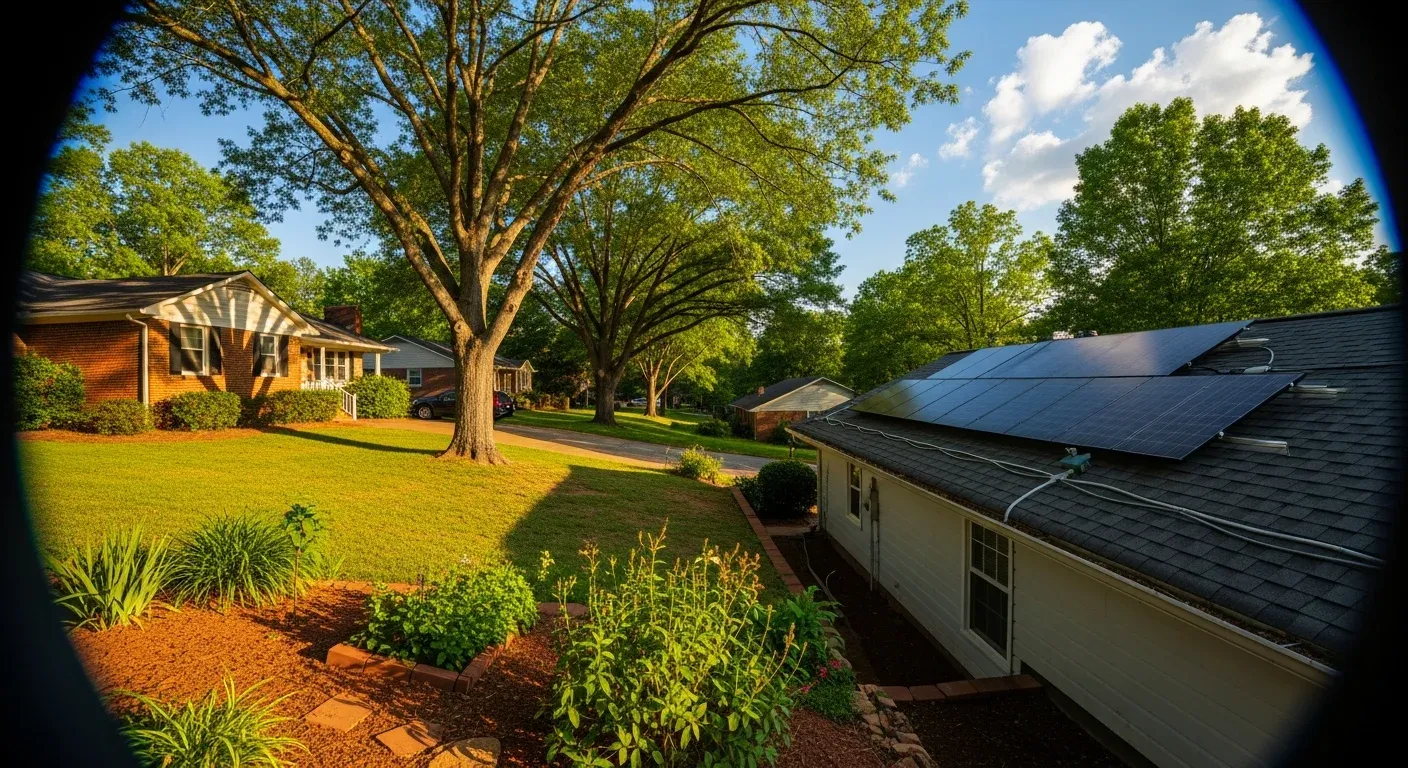
North Georgia and the Atlanta metro see a bit less irradiance and more tree cover than south Georgia farmland. Peak sun hours are still generally healthier than the Mid-Atlantic. The bigger difference is often shade and roof complexity in established neighborhoods versus open rural roofs. We use site-specific shade analysis either way. A “Georgia average” production factor is how overselling happens in leafy suburbs.
Broker advantage
Georgia is a competitive sales market. Quotes diverge on whether they assume a net metering slot you may not get, on battery upsells you may not need, and on roofs that should be replaced first. Nespola shops multiple Tier 1 companies, runs a manager side-by-side, and can include roofing or siding when the house needs it. Call (215) 431-3330 or email nespolaco26@gmail.com with your utility (Georgia Power, EMC, or muni) and a recent bill. We will tell you if the 2025 incentive stack works on your meter before anyone orders panels.
Ready to go solar? Call (215) 431-3330 or Get a Free Estimate →