New Jersey SREC-II Program: A Homeowner's Guide to Solar Renewable Energy Credits
By Nespola Solar Solutions Team
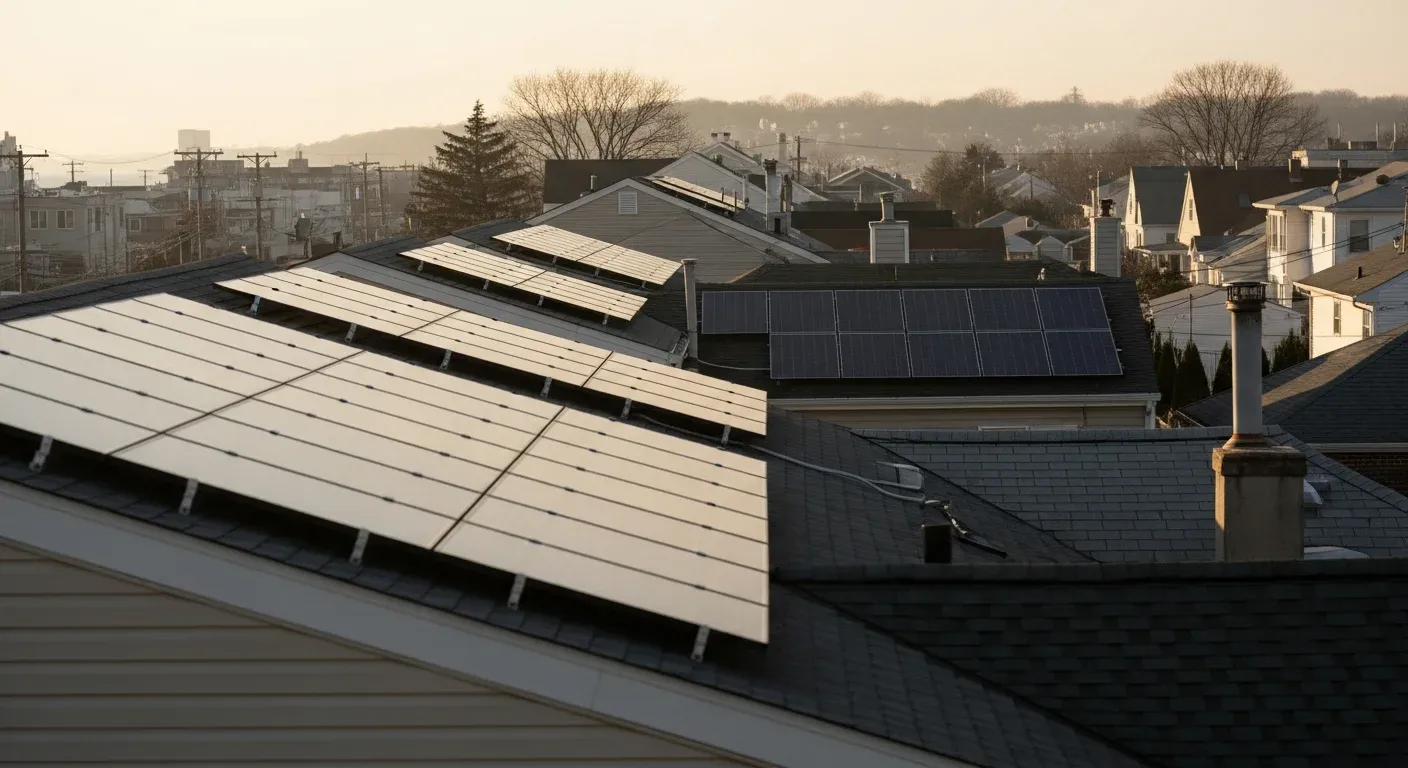
New Jersey remains one of the best states in the country to own a rooftop solar system, and the reason is not just sunshine. It is the incentive stack: bill savings from net metering, the federal Investment Tax Credit, and a production-based state incentive that homeowners still hear called SREC-II.
Nespola Solar Solutions is based in Cherry Hill Township. We walk New Jersey homeowners through SuSI paperwork before anyone drills into the roof.
What an SREC actually is
A Solar Renewable Energy Credit represents the environmental attributes of one megawatt-hour of solar generation. In the original New Jersey SREC market, those credits traded at a floating price. That market closed to new residential systems years ago. What replaced it is the Successor Solar Incentive (SuSI) program. For most behind-the-meter homes, the Administratively Determined Incentive (ADI) pathway — the program people still nickname SREC-II — pays a fixed dollar amount per megawatt-hour for 15 years.
That distinction matters. You are not hoping the spot market stays high. You are locking an administratively set production payment for a defined term, provided the system is registered and interconnected correctly.
How SREC-II / SuSI ADI works
After the Board of Public Utilities sets the ADI rate for your market segment and program year, an eligible residential system that is accepted into the program earns that rate on metered production for 15 years. It is not a rebate check at install. It is a production adder on top of the kilowatt-hours that also lower your utility bill.
Miss the registration window, botch the interconnection, or size past program rules, and you can install a beautiful array that never sees the incentive. We flag that paperwork on the same call as the equipment comparison.
Pricing — treat the current rate as a snapshot
ADI rates change by program year and segment. Salespeople who quote a single “current SREC price” as if it were a 25-year guarantee are mixing the old floating SREC market with SuSI. Ask for:
- The program year and market segment (residential, behind the meter).
- The $/MWh ADI rate they modeled.
- Confirmation that your project is in the ADI queue, not assumed.
We model SuSI as a real but program-specific line item, then show you bill savings and the federal credit separately so one inflated number cannot hide a weak contract.
Registration, stacking, and the federal ITC
Registration, meter data, and utility interconnection all have to line up. The federal 30% ITC stacks with SuSI because one is a federal tax credit on qualified cost and the other is a state production incentive. Ownership structure still matters: loans and cash typically keep the ITC with you; leases and some PPAs send it to the fund.
New Jersey net metering for eligible residential systems remains among the more homeowner-friendly frameworks in the country, which is why paybacks here often land in a 6–9 year band on a 25-year production warranty — when the quote is honest.
That combination — SuSI, ITC, and retail-rate net metering — is why NJ is still a top solar state even as equipment prices and interconnection queues shift.
If you are in Cherry Hill, Camden County, or anywhere else in the Garden State, start on our New Jersey service area page or request a free estimate. Call (215) 431-3330 with 12 months of kWh and a roof photo.
Ready to go solar? Call (215) 431-3330 or Get a Free Estimate →