Going Solar in the Carolinas: NC & SC Incentives, Net Metering & What to Expect
By Nespola Solar Solutions Team
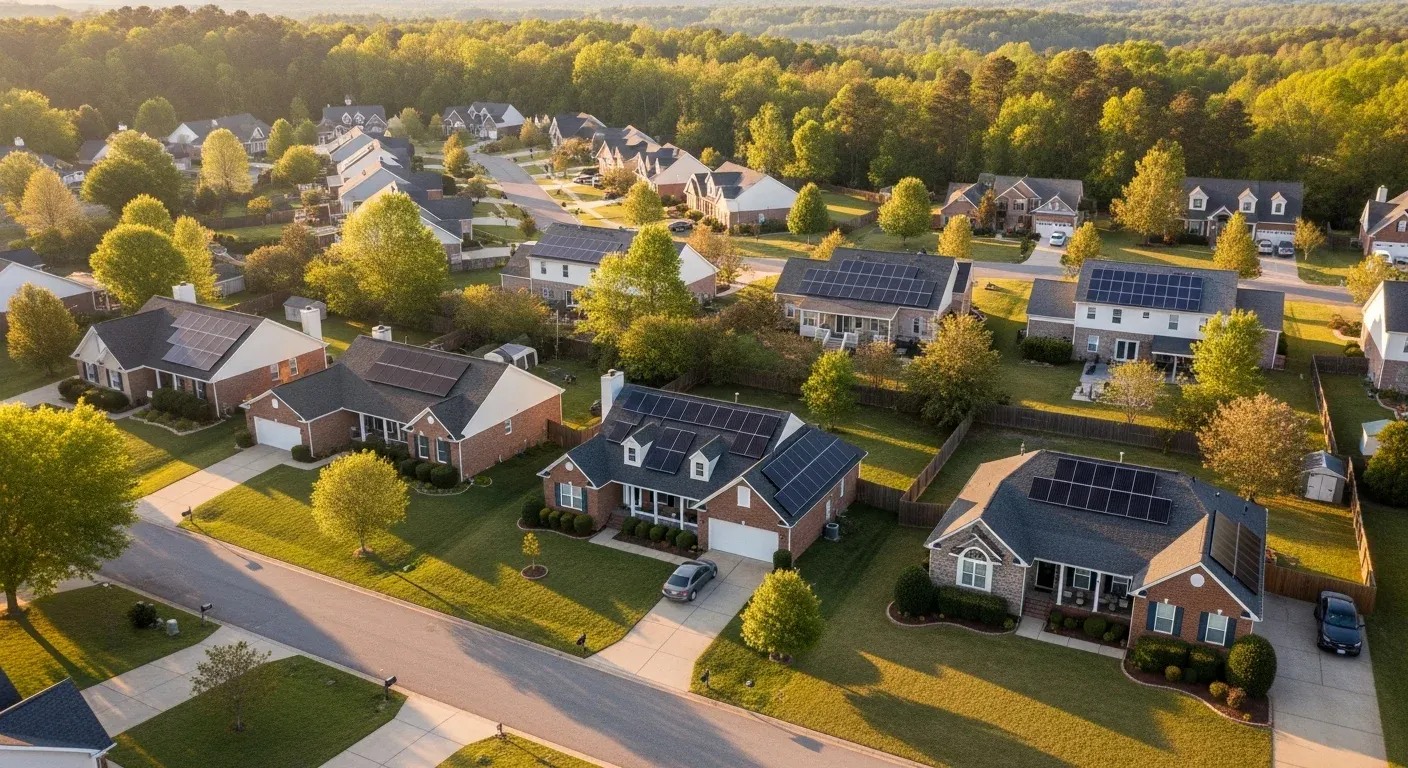
The Carolinas share the 30% federal Investment Tax Credit and investor-owned utilities that still credit rooftop exports. They do not share one “Carolinas solar program.” Tax credits, size caps, and paperwork are state-specific. A Charlotte Facebook quote used as gospel in Charleston will mis-model the deal.
Nespola Solar Solutions is a national solar brokerage. We shop Tier 1 panel packages across multiple licensed installers so Carolinas homeowners compare equipment, warranties, and financing instead of taking one door-knock number.
Federal ITC at 30%
The federal residential clean energy credit remains 30% of qualified costs. On a $26,000 array, that is a $7,800 credit against federal tax liability, with carryforward if you cannot use it all in one year. You generally need to own the system — cash or loan — to claim it. Leases and many PPAs assign the credit to the third-party owner.
A 30% credit on an inflated loan principal is not a bargain. Carolinas products can roll dealer fees into the amount financed. We compare APR, fees, and buy-down structures before anyone treats the ITC as free money.
North Carolina: Duke, Dominion, 20 kW, and property tax
For eligible residential customer-generators, North Carolina net metering has meant 1:1 retail energy credit on exports, with a practical 20 kW cap. A kWh you send to the grid knocks a kWh off what you later buy, for the energy portion of the bill. You still pay customer charges and other non-bypassable fees. You are not getting a monthly check for unlimited surplus.
Duke Energy (Carolinas and Progress) and Dominion Energy North Carolina each run their own interconnection portals and meter queues. The credit rate may look similar on a slide. The timeline to permission to operate does not. Rural feeders, transformer upgrades, and incomplete applications are the usual delays.
The North Carolina Utilities Commission has revisited net metering design in recent dockets — export valuation, rider structure, and new applicants versus grandfathered systems. The contract should name the rider you will be billed on after PTO. If a salesperson cannot say whether you are on the current 1:1 residential structure or a successor export rate, the savings model is fiction.
North Carolina provides a 100% property tax exemption for qualifying solar equipment. Someone still has to file with the county. We treat that filing as close-out, not an afterthought.
Details for the state: North Carolina service area.
South Carolina: Dominion, the 25% credit, and property tax
Dominion Energy South Carolina net metering for eligible homes has historically made a right-sized rooftop system a bill-offset tool, not a wholesale plant. Confirm the current rider in writing. Other SC utilities and co-ops set their own buyback rules. A Dominion design can be a poor fit on a co-op with a weaker export rate.
The South Carolina solar energy tax credit is the line item people miss if they only know the ITC. Eligible taxpayers can claim 25% of cost, up to $3,500 per year, with unused credit carried forward. It is a state income tax credit, not a rebate at closing. You need South Carolina tax liability the same way you need federal liability for the ITC. We model it as a multi-year cash-flow item, not 25% off the invoice in year one.
South Carolina also provides a property tax exemption for qualifying solar. File it. An unfiled exemption in a rising-assessment county is a slow leak.
Details for the state: South Carolina service area.
Interconnection timelines and HOA solar rights
Typical investor-owned-utility residential jobs in the Carolinas run from a few weeks to a few months: application, completeness review, possible upgrade, municipal permit, install, inspection, meter set, PTO. HOA review, 100-amp services, and roof work add calendar time no production slide shows. We get in writing the application-to-PTO range for your utility, whether a transformer upgrade is likely, and who owns incomplete paperwork.
Both states have solar rights laws that limit how far an HOA can ban or unreasonably restrict rooftop solar. That does not mean you skip the architectural packet. It means a blanket “no solar” rule usually will not hold. We still submit layout and cut sheets first; fighting a covenant after install costs more.
Broker advantage
Duke, Dominion NC, and Dominion SC attract both excellent Tier 1 crews and quotes that bury dealer fees or assume a rider you may not receive. Nespola shops multiple installers against the same 12-month kWh file so equipment, workmanship warranties, and interconnection speed stand on their own. For qualified homeowners, that shopping does not add a line-item broker fee on your proposal.
For Carolinas math on your meter, start with North Carolina or South Carolina, then Get a Free Solar Estimate. Call (215) 431-3330 with a recent bill and your utility name.
Ready to go solar? Call (215) 431-3330 or Get a Free Estimate →