Pennsylvania Solar Incentives: Federal Tax Credit, Net Metering, and SREC Markets
By Nespola Solar Solutions Team
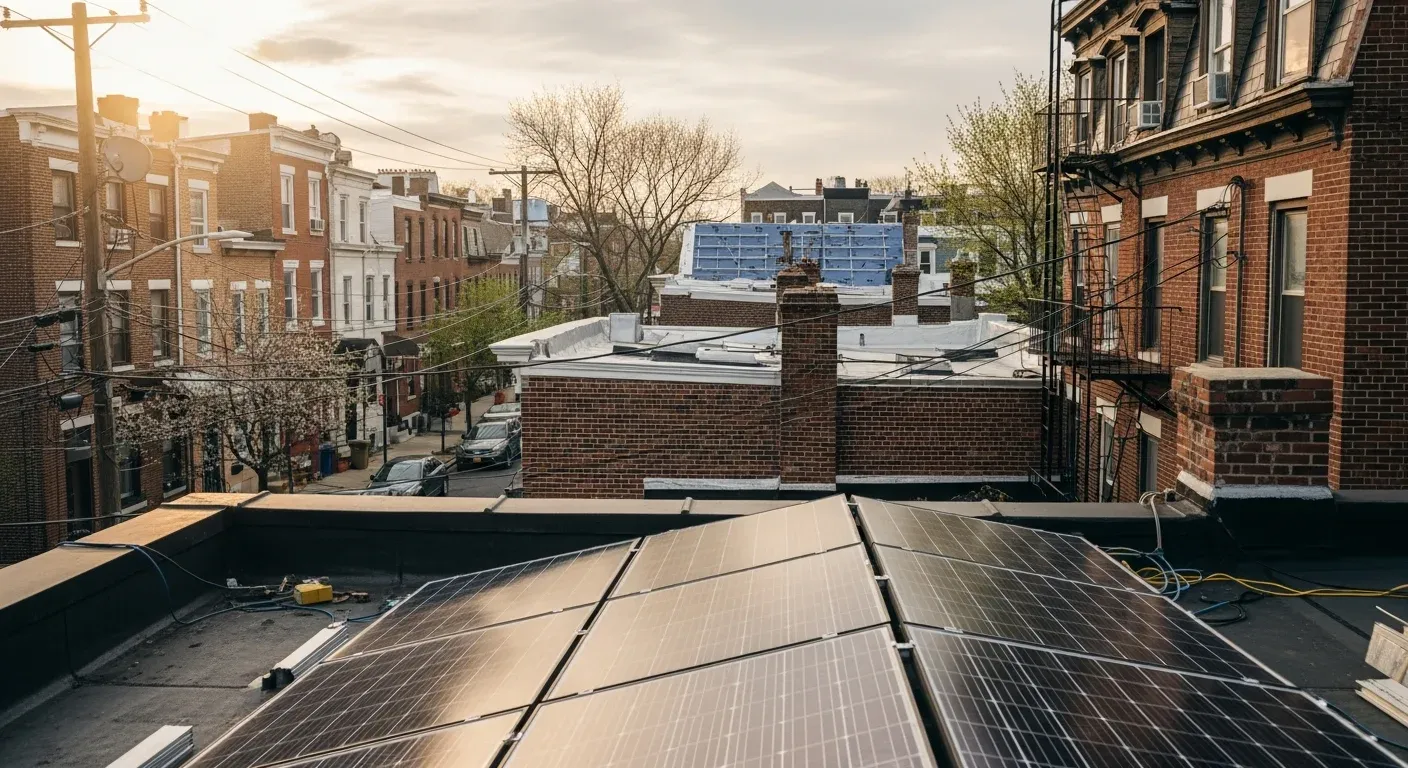
Pennsylvania does not always make national “best solar states” lists. That is a gift to homeowners who do the homework. Between the 30% federal ITC, customer-generator net metering, and the SREC market created by the Alternative Energy Portfolio Standard (AEPS), a well-designed rooftop system can still be a solid 20-year decision.
Nespola Solar Solutions works Pennsylvania regularly from Cherry Hill — including Delaware County — and the details below are what we actually walk through on manager calls.
Federal ITC at 30%
The federal residential credit is 30% of qualified costs. On a typical mid-$20,000s to mid-$30,000s Pennsylvania system before incentives, that is a substantial cut in net cost for owners who can use the credit. Loans usually preserve ownership and the credit; leases and PPAs generally do not. Snow load, older electrical services, and slate or tile roofs are the usual cost drivers here.
Net metering and Act 129
Pennsylvania’s net metering rules for eligible customer-generators allow credit for excess generation, subject to size caps and utility tariffs. Act 129 is the broader energy-efficiency statute that shapes how utilities run programs; your interconnection and net metering live in the utility tariff, not in a Facebook explainer.
Do not oversize past what the tariff will credit at a useful rate. Virtual net metering and community-solar options exist in limited forms; most homeowners we help are doing behind-the-meter rooftop.
SRECs and AEPS
A Solar Renewable Energy Credit represents 1 MWh of solar generation. AEPS creates demand for those credits. Certified residential systems can sell SRECs, usually through an aggregator, at a market price that moves with supply and compliance needs.
Treat SREC income as a bonus, not the foundation of the model. Registration, meter data, and aggregator fees have to be set up or you will generate electrons and never see the credit. Do not let a salesperson lock in today’s SREC print as a 25-year guarantee.
PECO, PPL, and Duquesne Light
Territory is not a footnote:
- PECO (greater Philadelphia, Delaware County, and surrounding): denser housing, more shade, specific interconnection queues. We see a lot of insurance-plus-roof work here before solar.
- PPL (much of central and eastern PA): different application portals, sometimes different upgrade costs on rural feeders.
- Duquesne Light (Pittsburgh area): own tariff language and inspection cadence. Do not reuse a PECO production slide on a Duquesne house.
FirstEnergy operating companies and borough utilities add still more variation. Always design to the meter you have.
How PA homeowners stack incentives
The honest stack is ITC + net-metered bill savings + SREC income, minus loan cost and any roof work. Pennsylvania peak-sun hours are not Arizona; winter production drops. That is fine if the system is sized to annual kWh and net metering is working. It is a problem if the sales deck used a Southwest weather file.
Start on our Pennsylvania service area page or call (215) 431-3330 with your utility name and 12 months of usage. We will run Pennsylvania math, not generic Mid-Atlantic math.
Ready to go solar? Call (215) 431-3330 or Get a Free Estimate →