How Much Do Solar Panels Cost in New Jersey in 2025?
By Nespola Solar Solutions Team
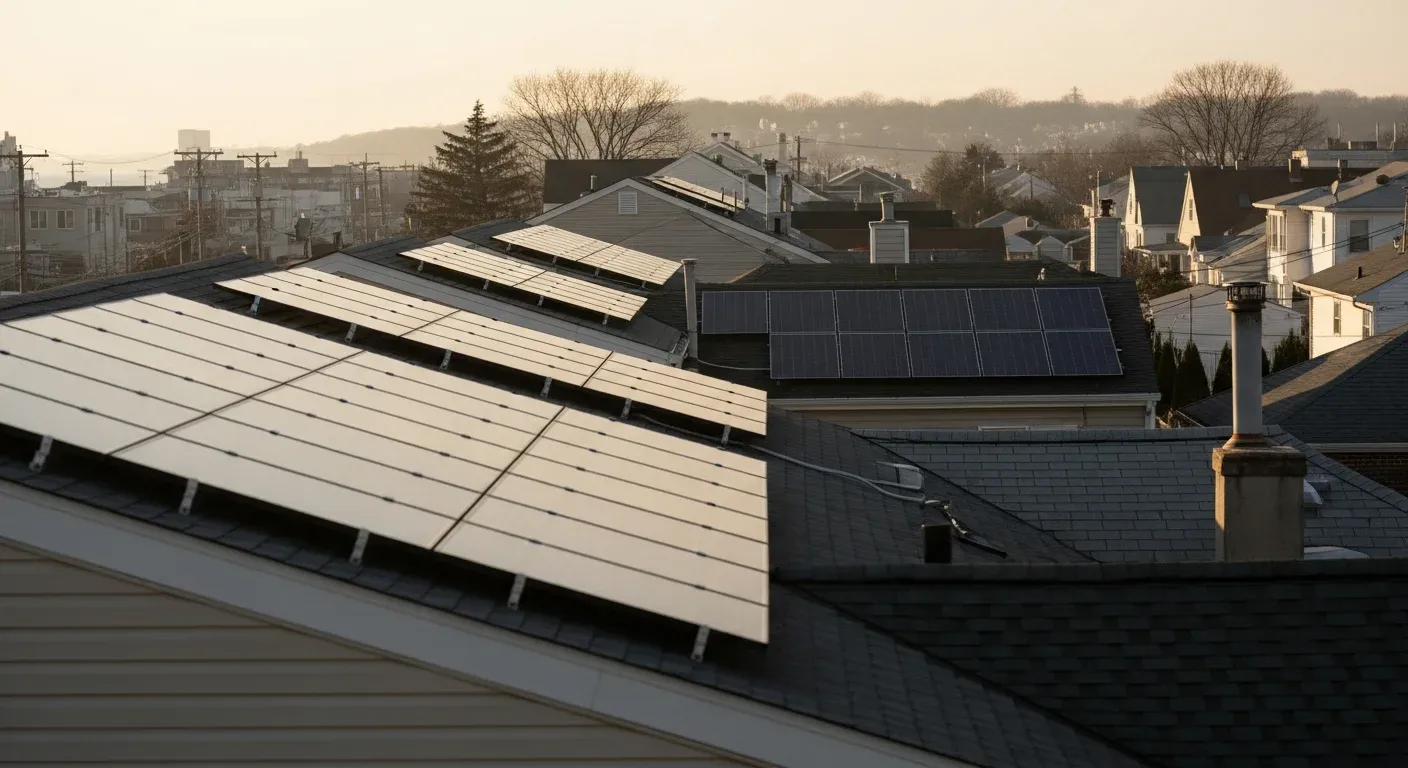
New Jersey remains one of the strongest solar markets in the country, even as equipment prices, interconnection rules, and incentive programs keep shifting. If you own a home in Cherry Hill, Camden County, or anywhere else in the Garden State, the question is not whether solar can work here. It is how much you will actually pay after incentives, how long the system takes to pay for itself, and which installer you should trust with a 25-year asset on your roof.
Nespola Solar Solutions is a national solar brokerage based in Cherry Hill Township. We shop multiple Tier 1 companies on your behalf so you are not locked into one quote. Below is a clear 2025 snapshot of New Jersey solar cost, the SuSI / SREC-II program, the federal Investment Tax Credit, net metering, and why using a broker usually beats going direct to a single installer.
Average system cost before incentives
For a typical New Jersey home using 8,000–12,000 kilowatt-hours a year, a 7–11 kW rooftop system is common. Before incentives, installed prices in 2025 generally land in the $25,000–$35,000 range for a quality Tier 1 equipment package, depending on roof complexity, electrical upgrades, and whether you need roof work first.
That sticker price is not what most homeowners keep. New Jersey has stacked incentives that materially change the math. What you should compare is net cost, monthly cash flow, and how the warranty and production guarantee are structured — not the first number on a sales flyer.
- Simple, south-facing roofs with a recent reroof sit at the lower end of the range.
- Older electrical panels, multiple roof planes, or shading that requires microinverters push cost up.
- Bundling a roof replacement with solar often looks more expensive on paper and cheaper over 20 years, because you avoid tearing panels off later.
Federal ITC: 30% off qualified costs
The federal residential clean energy credit remains 30% for systems placed in service in 2025. On a $30,000 system, that is a $9,000 credit against your federal tax liability. You must have enough tax liability to use it (it can carry forward), and the system must meet IRS rules for a dwelling you own.
The ITC applies to qualified solar equipment and certain related costs. If you finance with a solar loan, you can often still claim the credit as the system owner. Leases and some PPAs work differently because the third-party owner typically claims the credit and prices it into your contract. That is one of the first things we review when we sit down with homeowners.
New Jersey SuSI and SREC-II
New Jersey’s Successor Solar Incentive (SuSI) program replaced the original SREC market. For most residential rooftop systems, the Administratively Determined Incentive (ADI) pathway — often discussed alongside SREC-II language — pays a fixed incentive for energy produced over a set term. The exact dollar-per-megawatt-hour rate and term depend on the program year, market segment, and whether the project is behind-the-meter residential.
In practical terms, SuSI is a production-based adder on top of bill savings. It is not a rebate that arrives as a single check at install. Registration, interconnection, and program eligibility all have to be handled correctly or you can miss the incentive. A broker who works New Jersey every week will flag that paperwork before you sign, rather than after the array is on the roof.
Net metering in New Jersey
New Jersey net metering still lets qualifying residential systems send excess power to the grid and receive bill credits, typically at a full retail-rate structure for eligible customer-generators under current Board of Public Utilities rules. That is a major reason payback here is faster than in states that have moved to avoided-cost export rates.
You still need to size the system to your usage. Oversizing past what net metering will credit is a common sales trick. We size to your actual 12-month kWh history, then model export, winter production, and any planned EV or heat-pump load so you are not paying for unused capacity.
Typical payback: 6–9 years
After the 30% ITC, SuSI production payments, and net-metered bill savings, many New Jersey homeowners see simple payback in 6–9 years on a 25-year production warranty. High usage, a clean south roof, and a competitive installer bid land toward six years. Heavy shading, a complex roof, or a weak utility rate structure can stretch toward nine.
Payback is not the only metric. Cash-flow year one, loan APR, dealer fees buried in the principal, and whether the roof will outlast the array all matter more than a glossy “savings” slide.
Why a broker usually saves money
Going direct to one installer means you see one price, one equipment stack, and one financing menu. Nespola shops multiple Tier 1 companies, walks you through a side-by-side comparison with our manager, and flags dealer fees, weak workmanship warranties, and roofs that should be replaced before panels go up. There is no extra fee to you for that shopping process on qualified projects — the installer pays the broker, the same way a mortgage broker is paid.
If you want a New Jersey number that is actually comparable, start with your latest utility bills and a roof photo. Call (215) 431-3330 or request a free estimate. We will tell you whether solar, a roof-plus-solar bundle, or waiting on a repair is the smarter move.
Ready to go solar? Call (215) 431-3330 or Get a Free Estimate →