Zero Out-of-Pocket Solar: How It Actually Works
By Nespola Solar Solutions Team
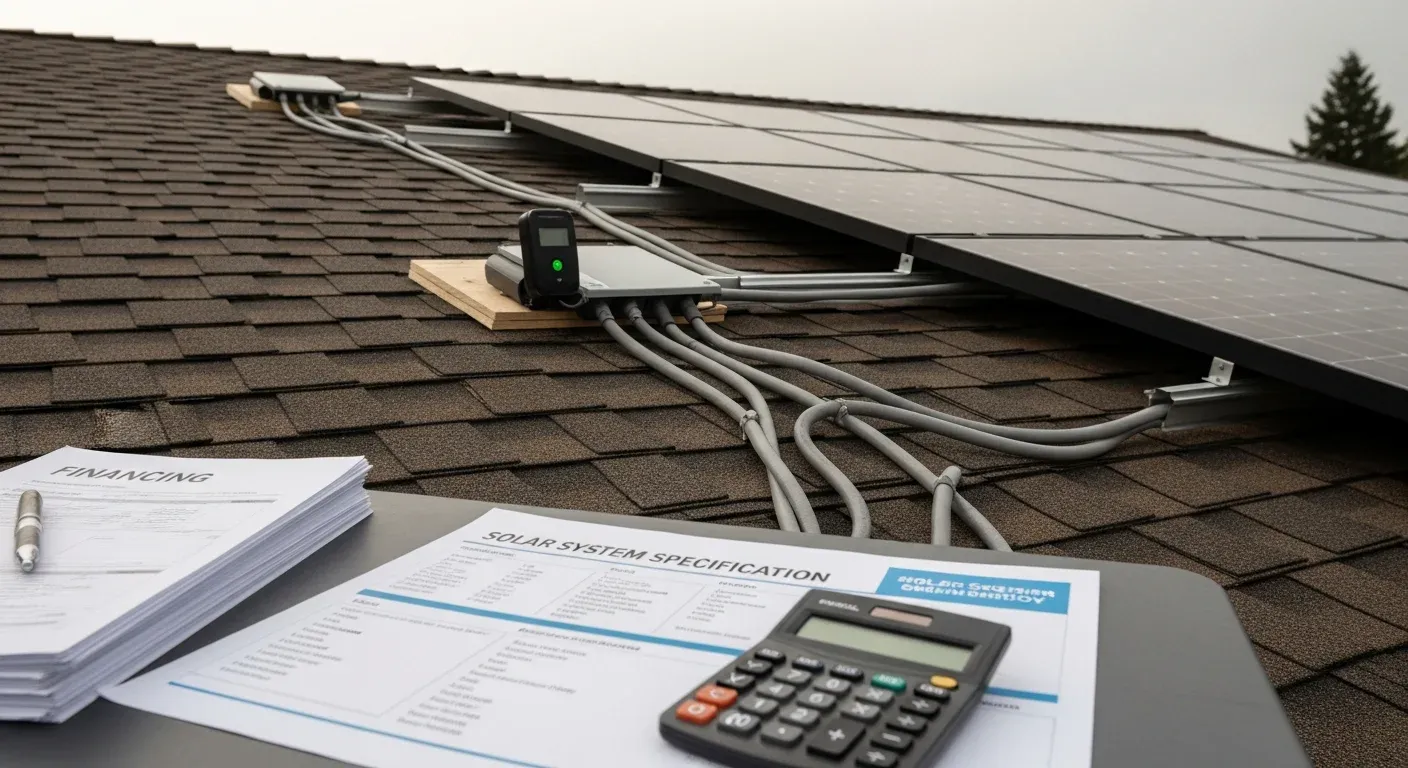
“Zero out-of-pocket” is the phrase every solar ad leads with, and it is also the phrase that gets homeowners in trouble when nobody explains the contract. It does not mean the system is free. It means a qualified homeowner can get panels installed without writing a check at signing — because a lender, a lease company, or a PPA provider is putting up the capital. Nespola Solar Solutions uses that structure every week. We also spend a lot of time un-selling bad versions of it.
What “zero out-of-pocket” actually means
There are three common products:
- Solar loan: You own the system. A lender pays the installer. You make monthly payments. You typically claim the 30% federal ITC if you qualify. Dealer fees may be baked into the loan amount.
- Power purchase agreement (PPA): A third party owns the system. You pay per kilowatt-hour generated, usually with an annual escalator. They typically take the ITC. Your “savings” are the spread between the PPA rate and the utility rate.
- Lease: Third-party ownership with a fixed (or escalating) monthly payment rather than a per-kWh rate. Similar tax treatment to a PPA. Buyout and move/sale rules matter a great deal.
All three can be structured with $0 due at install. All three can also be structured so that year-five payments exceed what you would have paid the utility. The product name is not the protection. The numbers are.
How qualified homeowners get $0 down
Lenders and fund managers will fund a project when the risk looks acceptable: you can pay, the house can take the array, and the utility interconnection is realistic. The installer is paid at milestones. You are not floating a $30,000 wire. That is the entire mechanic behind “no money out of pocket.”
If someone says the government is giving you free panels, hang up. The federal ITC is a tax credit for system owners, not a grant that shows up as cash at closing for every homeowner.
What “qualified” means
Criteria vary by lender and by PPA fund, but the pattern is consistent:
- Credit: Many solar loans start around the mid-600s FICO; stronger credit unlocks lower APRs and fewer dealer fees. PPAs sometimes approve on a combination of credit and utility history.
- Homeownership: You need authority to encumber the property. Trusts, co-ops, and HOAs add steps. Renters are not candidates for rooftop ownership products on someone else’s building.
- Utility bill size: If you use very little electricity, a full roof array will not pay for itself. We would rather tell you to wait or to do a small system than invent savings.
- Roof and electrical: A 22-year-old roof or a 100-amp panel that cannot take a backfeed may require work first. That work might still be financeable, but it is not invisible.
Monthly payment vs. utility bill
The only comparison that matters is your all-in monthly energy cost after solar versus before, using a conservative production estimate and your real tariff — including fixed charges you cannot offset. A loan payment that is $20 below last August’s bill but $40 above next February’s bill is not automatically a win. We model 12 months, not one peak AC bill.
Watch escalators on PPAs and leases. A 2.9% annual increase looks small in year one and expensive in year 12 if your utility rates do not rise as fast as the salesperson assumed.
What to watch out for
- Dealer fees that inflate principal so the “rate” looks low.
- Production estimates 15–20% above PVWatts for your address.
- Workmanship warranties that vanish if the original installer is sold.
- Roof work excluded, then added as a change order after your cancellation window.
- Ucc-1 filings and HOA/utility permission that were never obtained.
Why Nespola vets the options
We shop multiple Tier 1 companies and sit with you on a manager walkthrough so loan, PPA, and cash (if you prefer) are compared on the same usage file. If $0 down is a bad fit — thin credit, tiny bill, roof that should be replaced on insurance first — we will say that. Call (215) 431-3330 or request a free estimate. Bring a credit-range you are comfortable sharing and 12 months of kWh. That is how you find out if zero out-of-pocket is a tool, or just an ad.
Ready to go solar? Call (215) 431-3330 or Get a Free Estimate →