Zero Out-of-Pocket Solar: How It Actually Works (And Who Qualifies)
By Nespola Solar Solutions Team
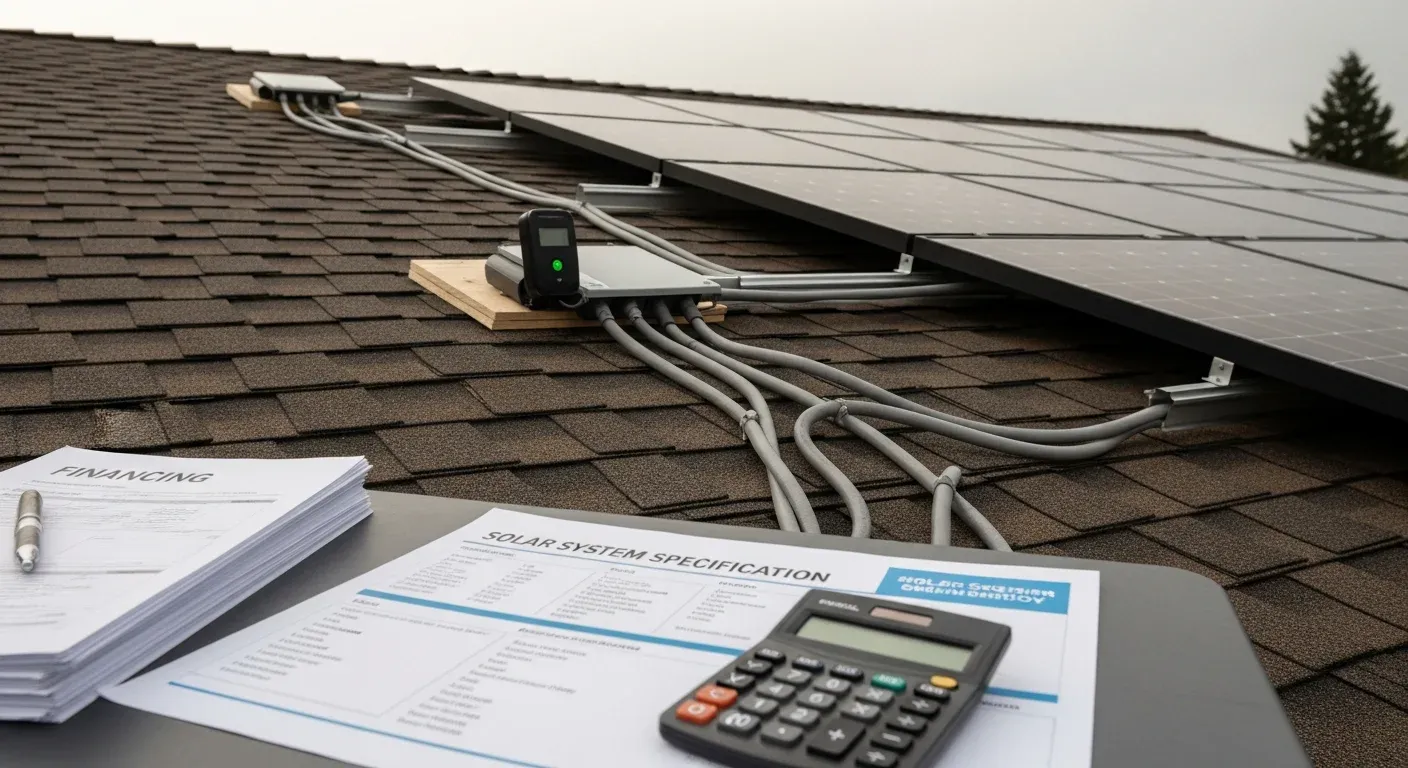
“Zero out-of-pocket” is the line every solar ad leads with. It does not mean the panels are free. It means a qualified homeowner can get a system installed without writing a check at signing, because a lender or a third-party owner is putting up the capital. Nespola Solar Solutions uses that structure every week. We also spend a lot of time un-selling the bad versions of it.
The three main paths
$0-down solar loan. You own the system. A lender pays the installer. You make monthly payments. As the owner, you typically claim the 30% federal ITC if you have the tax liability (it can carry forward). Dealer fees may be baked into the principal so the “rate” looks lower than the true cost of credit.
Lease. A third party owns the array. You pay a fixed (or escalating) monthly payment. They typically take the ITC and price it into the contract. Buyout, move/sale, and roof-work rules are the fine print that matters.
Power purchase agreement (PPA). Third-party ownership again, but you pay per kilowatt-hour generated, usually with an annual escalator. Your “savings” are the spread between the PPA rate and the utility rate — if that spread holds.
All three can be structured with $0 due at install. All three can also be structured so year-five payments exceed what you would have paid the utility.
Why Nespola recommends owned systems
We would rather you own the asset on a loan or cash purchase than rent it for 25 years. Ownership keeps the ITC with you, keeps the residual value of the array, and keeps you from living with a 2.9% annual escalator that looked small in the pitch deck. Leases and PPAs can still be the right tool for a thin tax situation or a short time horizon. We will say so. We will not pretend they are the same product as owning.
Who qualifies
Criteria vary by lender and fund, but the pattern is consistent:
- Credit. Many solar loans start around the mid-600s FICO. Stronger credit unlocks lower APRs and fewer dealer fees. PPAs sometimes approve on credit plus utility history.
- Homeownership. You need authority to bind the property. Trusts, co-ops, and HOAs add steps.
- Bill size. If you use very little electricity, a full roof array will not pay for itself.
- Roof and electrical. A 22-year-old roof or a 100-amp panel that cannot take a backfeed may need work first. That work might still be financeable. It is not invisible.
How the 30% ITC flows through a loan
On a qualified owned system, the ITC is a tax credit on eligible cost — not a rebate at closing and not “the government paying for your panels.” With a solar loan you still own the system, so you generally claim the credit on your federal return. Some products offer an ITC prepay or a payment step-down after you file. Read which one you actually have. If the loan inflated principal with dealer fees, you are financing a larger number than the hardware is worth even after 30%.
“Zero out of pocket” means no cash at signing, not no cost over 25 years. The only comparison that matters is all-in monthly energy cost after solar versus before, using a conservative production estimate and your real tariff.
See solar financing options or request a free estimate. Call (215) 431-3330 with a credit range you are comfortable sharing and 12 months of kWh.
Ready to go solar? Call (215) 431-3330 or Get a Free Estimate →